Digital marketing has shifted from broad, mass targeting to highly personalized and location-driven strategies. One of the most effective approaches leading this shift is GEO (Geographic Optimization). As users increasingly rely on search engines to find nearby products and services, businesses must optimize their digital presence to align with location-based intent.
This detailed guide explains what GEO is in digital marketing, how it works, and how you can use it to drive targeted traffic, improve local rankings, and increase conversions in 2026.
What is GEO in Digital Marketing?
GEO in digital marketing refers to the practice of optimizing your website, content, and advertising campaigns to target users in specific geographic locations. These locations can range from countries and states to cities, neighborhoods, or even a defined radius around a business.
Instead of trying to reach a broad audience, GEO allows marketers to focus on users who are most likely to engage and convert based on their location. This approach is especially useful for service-based businesses, local stores, and companies targeting region-specific markets.
Why GEO Matters More Than Ever in 2026
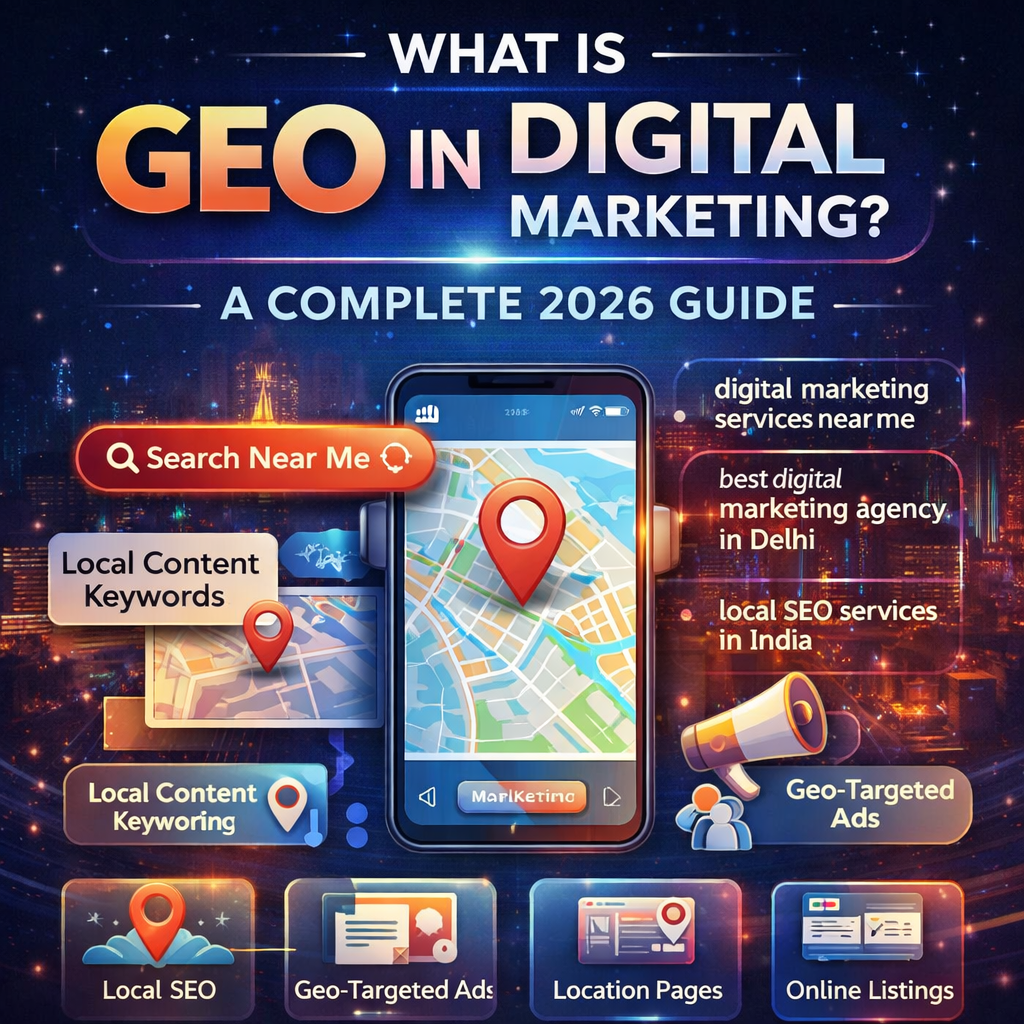
With the rise of mobile-first browsing and AI-powered search, user behavior has become heavily location-driven. People are no longer just searching for “digital marketing services” – they are searching for “digital marketing services near me” or “best digital marketing agency in Delhi.”
Search engines now prioritize delivering results that are geographically relevant. This means businesses that invest in GEO strategies are more likely to appear in front of high-intent users who are ready to take action.
Another major factor is voice search. Queries like “find SEO services near me” or “best agency nearby” are growing rapidly. GEO optimization ensures your business is aligned with these conversational, location-based queries.
High-Traffic GEO Keywords to Target
To succeed with GEO, integrating high search volume keywords is essential. These keywords should be used naturally across your content, headings, and metadata to improve rankings and visibility.
Some high-performing GEO keywords include:
- digital marketing services near me
- best digital marketing agency in Delhi
- local SEO services in India
- geo-targeting in digital marketing
- location-based marketing strategies
- SEO services for small businesses near me
- hyperlocal SEO services
- local search optimization services
- geo-targeted advertising strategies
- digital marketing company near me
Using these keywords strategically helps search engines understand your geographic relevance and improves your chances of ranking in local search results.
Types of GEO Targeting in Digital Marketing
Local SEO Optimization
Local SEO focuses on improving your visibility in geographically relevant search results. This involves optimizing your website for location-based keywords, maintaining consistent business information, and improving your presence on local listings.
Geo-Targeted Advertising
Paid advertising platforms such as Google Ads and social media channels allow businesses to target users based on specific locations. This ensures that your ads are only shown to people who are most likely to convert, reducing wasted ad spend.
Location-Based Content Marketing
Creating content tailored to specific locations helps attract targeted traffic. For example, a blog or landing page focused on “SEO services in Mumbai” can rank for location-specific searches and bring in relevant users.
Hyperlocal Marketing
Hyperlocal marketing narrows the focus even further by targeting very specific areas such as neighborhoods or local communities. This is particularly effective for small businesses competing in dense markets.
How GEO Works in SEO
Search engines use a combination of signals to determine which content is relevant for a specific location. These signals include the user’s IP address, device location, and the presence of geographic keywords within the content.
Additionally, platforms like Google rely heavily on business listings, local backlinks, and customer reviews to assess credibility and relevance. When your website aligns with these signals, it becomes more likely to appear in local search results, including map listings and “near me” queries.
How to Implement an Effective GEO Strategy
Optimize for Location-Based Keywords
Start by identifying keywords that include geographic modifiers such as city names, regions, or phrases like “near me.” These should be incorporated naturally into your website content, headings, and meta tags.
Create Dedicated Location Pages
If your business serves multiple areas, create separate landing pages for each location. Each page should include unique content, local keywords, and relevant information to avoid duplication issues.
Optimize Your Business Listings
A fully optimized business profile is critical for GEO success. Ensure your business name, address, and phone number are consistent across all platforms. Add images, update business hours, and encourage customer reviews to improve credibility.
Build Local Citations
Listing your business on local directories helps strengthen your online presence. Consistency across these platforms builds trust with search engines and improves your chances of ranking higher.
Use Structured Data Markup
Adding local business schema markup helps search engines better understand your business details, including location, services, and contact information. This can enhance your visibility in search results.
Focus on Local Content Creation
Publishing blogs, guides, and case studies focused on specific locations can significantly boost your local SEO performance. This type of content attracts highly targeted traffic and improves engagement.
Benefits of GEO in Digital Marketing
One of the biggest advantages of GEO is improved targeting. By focusing on a specific geographic audience, businesses can attract users who are more likely to convert, resulting in higher ROI.
Another benefit is reduced competition. Ranking for broad keywords can be difficult, but geo-specific keywords often have lower competition and higher conversion potential.
GEO also enhances user experience by delivering relevant content based on location. When users find exactly what they are looking for in their area, they are more likely to trust and engage with your business.
Common GEO Mistakes to Avoid
Many businesses make the mistake of creating duplicate location pages with minimal content. This not only affects rankings but can also lead to penalties from search engines.
Another common issue is inconsistent business information across directories. Even small differences in address or phone number can impact your local SEO performance.
Ignoring customer reviews is another major mistake. Reviews play a significant role in building trust and improving local rankings, so actively managing them is essential.
Future of GEO in Digital Marketing
As technology continues to evolve, GEO strategies will become even more advanced. AI-driven personalization will allow businesses to deliver highly tailored content based on real-time location data.
Voice search and smart assistants will further increase the importance of conversational, location-based queries. Additionally, emerging technologies like augmented reality could redefine how users interact with local businesses online.
Final Thoughts
GEO in digital marketing is a powerful strategy that enables businesses to connect with the right audience at the right location. In a world where search is becoming increasingly personalized and intent-driven, geographic optimization is essential for staying competitive.
By focusing on location-based keywords, creating targeted content, and optimizing your local presence, you can significantly improve your visibility, attract high-quality traffic, and drive better results from your digital marketing efforts.
The future of marketing is not just digital – it’s local, precise, and highly targeted.