
Search is evolving faster than ever—and at the center of this transformation is SGE (Search Generative Experience). If you’re working in SEO, content marketing, or digital strategy, understanding SGE is no longer optional. It’s essential.
In this 2026 guide, we’ll break down what SGE is, how it works, and what it means for the future of SEO.
What is SGE in SEO?
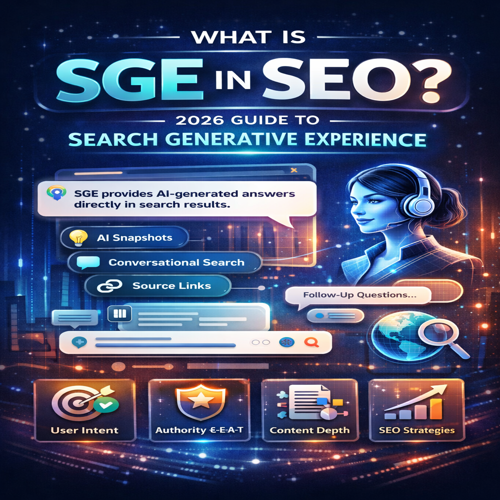
Search Generative Experience (SGE) is an AI-powered search feature that generates contextual, conversational answers directly within search results. Instead of showing only traditional blue links, SGE provides summarized insights, recommendations, and follow-up prompts—often before users click any website.
In simple terms:
SGE turns search engines into answer engines.
How SGE Works
SGE uses advanced AI models to understand user intent and generate responses by pulling information from multiple sources across the web. Here’s how it typically functions:
1. Query Understanding
SGE interprets the user’s search intent—not just keywords. It understands context, nuance, and even multi-part questions.
2. AI-Generated Snapshot
At the top of the search results, SGE displays a generated overview—a summarized answer compiled from multiple sources.
3. Source Linking
Even though SGE gives direct answers, it still includes links to authoritative sources, giving users the option to explore deeper.
4. Conversational Follow-Ups
Users can ask follow-up questions directly within search, creating a chatbot-like experience.
Why SGE Matters for SEO in 2026
SGE is reshaping how users interact with search engines—and that has major implications for SEO:
1. Reduced Click-Through Rates (CTR)
Since answers appear directly on the results page, fewer users may click through to websites—especially for informational queries.
2. Increased Competition for Visibility
Only a handful of sources are cited in SGE snapshots, making top-tier content more important than ever.
3. Shift from Keywords to Intent
Traditional keyword stuffing is obsolete. SGE prioritizes context, relevance, and depth over exact-match keywords.
4. Authority Becomes Critical
Websites that demonstrate expertise, trust, and credibility are more likely to be featured in SGE responses.
Key Features of SGE
Understanding SGE’s core features can help you optimize better:
- AI Snapshots: Summarized answers at the top of search
- Conversational Search: Follow-up questions within results
- Multimodal Results: Integration of text, images, and sometimes videos
- Personalized Responses: Tailored answers based on user behavior and context
How SGE Impacts SEO Strategy
To stay competitive in 2026, SEO strategies must evolve:
1. Focus on Content Depth (Content Deepening)
SGE favors comprehensive content that fully answers a topic—not just surface-level information.
Instead of writing:
- “What is SEO?”
You should cover:
- Definition
- Types
- Benefits
- Use cases
- FAQs
- Comparisons
2. Optimize for Questions
Since SGE is conversational, content should target question-based queries:
- What is SGE?
- How does SGE work?
- Is SGE good for SEO?
Use natural language and include clear, direct answers.
3. Build Topical Authority
Rather than isolated blog posts, create content clusters around a topic. This signals expertise and increases your chances of being cited.
4. Improve E-E-A-T Signals
Experience, Expertise, Authoritativeness, and Trustworthiness are key ranking factors in SGE.
Ways to improve:
- Author bios with credentials
- Case studies and real examples
- Trust signals (reviews, testimonials)
- Updated content
5. Use Structured Data
Schema markup helps search engines understand your content better, increasing your chances of being featured in SGE.
Best Practices to Rank in SGE
Here are actionable tips to optimize for SGE:
✔ Write Clear, Direct Answers
Start sections with concise definitions or summaries.
✔ Use Bullet Points and Lists
SGE prefers scannable content formats.
✔ Add FAQs
FAQ sections align perfectly with conversational search.
✔ Keep Content Updated
Fresh content is more likely to be selected by AI models.
✔ Include Data and Examples
Original insights increase credibility and visibility.
SGE vs Traditional Search
| Aspect | Traditional Search | SGE |
|---|---|---|
| Results | List of links | AI-generated answers + links |
| User Interaction | Click-based | Conversational |
| Focus | Keywords | Intent & context |
| Content Requirement | Optimized pages | Deep, authoritative content |
Challenges of SGE for SEO
While SGE brings opportunities, it also introduces challenges:
1. Traffic Decline
Informational queries may result in zero-click searches.
2. Content Saturation
Only high-quality content gets featured—low-value content becomes invisible.
3. Attribution Concerns
Sometimes, traffic may not reflect the value your content provides if it’s summarized in SGE.
The Future of SEO with SGE
SGE is not just a feature—it’s the future of search.
In the coming years, we can expect:
- More personalized search experiences
- Deeper integration of AI in SERPs
- Greater importance of brand authority
- Increased focus on user experience and engagement
SEO will move from ranking pages to earning mentions in AI-generated answers.
Final Thoughts
SGE is fundamentally changing how search works. Instead of optimizing just for rankings, SEO professionals must now optimize for visibility within AI-generated responses.
To succeed in 2026:
- Create content that answers real user questions
- Build authority in your niche
- Focus on depth, clarity, and trust
The goal is no longer just to rank—it’s to be the source AI trusts.