Search has undergone a fundamental transformation. What was once driven primarily by keywords and backlinks is now shaped by context, intent, and relationships between concepts. At the heart of this evolution lies Entity SEO – an approach that enables search engines to understand not just what content says, but what it means. For businesses aiming to stay competitive, especially in a landscape dominated by AI-driven search, mastering Entity SEO optimization is no longer optional – it is essential.
Understanding Entity SEO in the Semantic Era
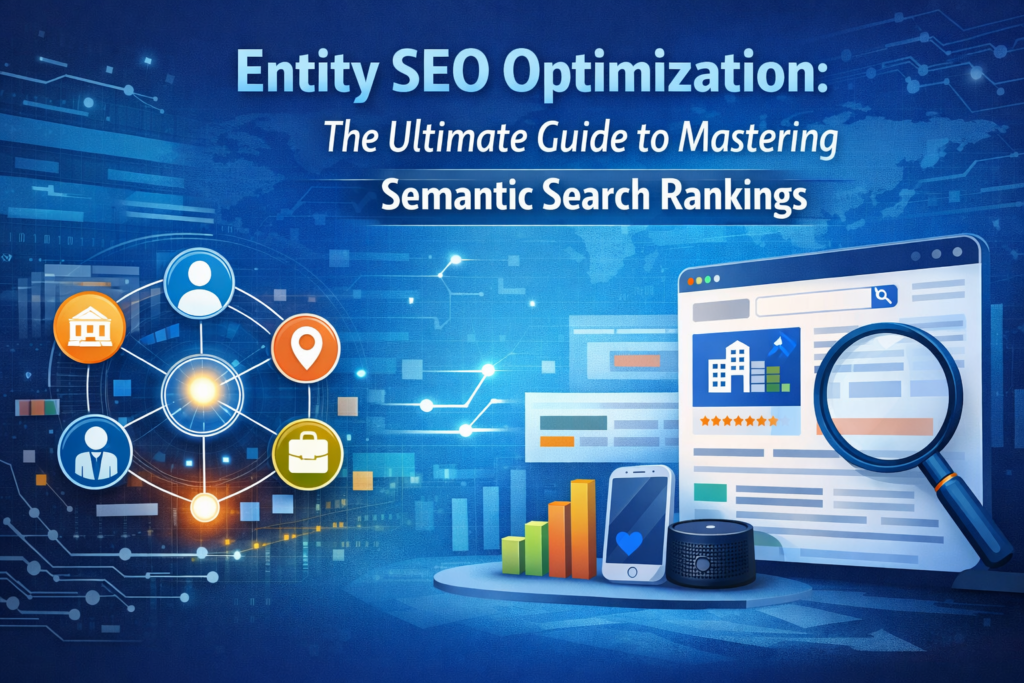
Entity SEO revolves around optimizing content and digital presence around identifiable entities – such as businesses, people, products, and concepts – rather than isolated keywords. Search engines now rely heavily on semantic understanding, using knowledge graphs and structured data to map relationships between entities.
For example, when a user searches for a service, search engines don’t just scan for keyword matches. They evaluate the credibility of the business, its relevance to the query, its connections to related topics, and its overall authority within a domain. This shift has redefined how rankings are determined.
Why Semantic Search Changes Everything
Semantic search focuses on user intent rather than exact keyword matches. It considers context, synonyms, search history, and even conversational queries. This means that businesses must think beyond traditional keyword strategies and focus on building a strong, well-defined digital identity.
Entity SEO plays a crucial role here. By clearly defining who you are, what you offer, and how you relate to other entities, you help search engines deliver your content as a reliable answer to user queries.
Strategic Advantages of Entity SEO Optimization
1. Clearer Search Engine Interpretation
One of the biggest advantages of Entity SEO is improved clarity. When your business is properly structured with consistent data and contextual content, search engines can easily understand your relevance.
This reduces ambiguity and increases your chances of appearing for a wider range of related queries—not just exact keyword matches.
2. Stronger Presence in Advanced Search Features
Entity-based optimization significantly improves your chances of appearing in rich results such as featured snippets, knowledge panels, and AI-generated summaries. These placements often dominate the search results page and attract higher engagement.
For businesses, especially SMBs, this can translate into greater visibility without necessarily competing for the top traditional ranking positions.
3. Long-Term Authority Building
Unlike short-term SEO tactics, Entity SEO contributes to long-term authority. When your brand is consistently associated with specific topics and mentioned across authoritative platforms, it builds a strong digital footprint.
Over time, this strengthens your trust signals, making it easier to rank for both competitive and niche queries.
4. Improved Content Relevance and Depth
Entity SEO encourages the creation of comprehensive, interconnected content. Instead of producing isolated pages targeting individual keywords, businesses develop topic clusters that cover subjects in depth.
This not only improves rankings but also enhances user experience, as visitors find more valuable and relevant information in one place.
5. Better Adaptation to AI and Voice Search
Modern search behavior includes voice queries and conversational searches. These formats rely heavily on semantic understanding.
Entity SEO ensures your content aligns with how users naturally ask questions, making it more likely to appear in voice search results and AI-generated answers.
Core Components of an Effective Entity SEO Strategy
Structured Data Implementation
Structured data, or schema markup, is a foundational element of Entity SEO. It helps search engines interpret your content in a standardized way.
By implementing schema for your business, services, reviews, and FAQs, you provide clear signals about your entity and its attributes. This enhances your chances of appearing in enriched search results.
Consistent Digital Identity
Consistency across all platforms is critical. Your business name, address, phone number, and branding should remain uniform across your website, directories, and social media profiles.
Even small inconsistencies can dilute your entity signals and impact search performance.
Topical Authority Through Content
Building authority requires depth. Instead of targeting a single keyword, focus on covering an entire topic comprehensively.
For instance, if you offer digital marketing services, your content should include SEO strategies, content marketing insights, analytics, local SEO, and industry trends. This creates a network of related content that strengthens your entity relevance.
Internal Linking and Content Architecture
A well-structured website helps search engines understand relationships between pages. Internal linking connects related content, reinforcing your expertise within a specific domain.
Topic clusters, pillar pages, and supporting articles all contribute to a stronger semantic structure.
Brand Mentions and Citations
Mentions across the web—whether linked or unlinked—play a vital role in entity recognition. Listings in business directories, media mentions, and industry platforms help establish credibility.
The goal is to create a consistent and widespread presence that reinforces your authority.
Common Challenges and How to Overcome Them
Many businesses struggle with Entity SEO because it requires a shift in mindset. It is not about quick wins but about building a sustainable digital presence.
One common challenge is lack of structured data implementation. Without it, search engines may misinterpret or overlook important information. Another issue is fragmented branding across platforms, which weakens entity signals.
To overcome these challenges, businesses should conduct regular audits of their digital presence, ensure consistency, and continuously update their content to reflect evolving trends and user intent.
The Future of SEO is Entity-Driven
As search engines continue to evolve, the importance of entities will only grow. AI-driven systems are becoming more sophisticated in understanding context and relationships, making traditional keyword-focused strategies less effective on their own.
Entity SEO aligns perfectly with this future. It focuses on building meaning, authority, and trust—elements that are essential for long-term success in search.
Final Thoughts
Entity SEO optimization is not just a technical enhancement; it is a strategic approach to building a recognizable and authoritative digital identity. By focusing on entities, relationships, and context, businesses can move beyond traditional limitations and achieve sustainable growth in search rankings.
The shift toward semantic search is already well underway. Those who invest in Entity SEO today will be better positioned to dominate search results tomorrow.