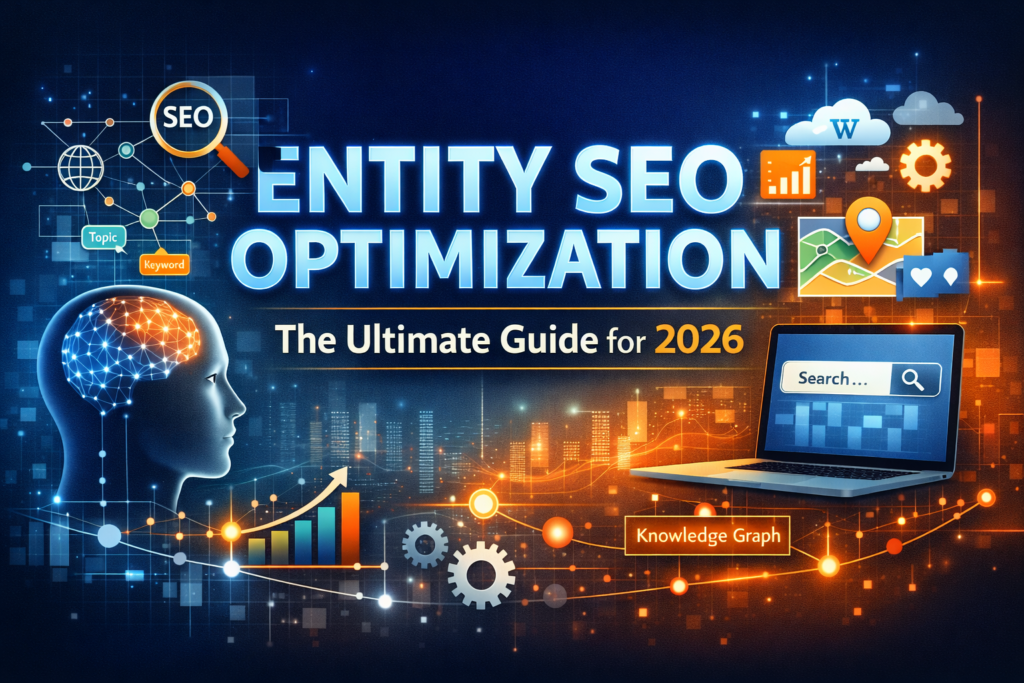
Search engines have undergone a fundamental transformation over the past few years. What once revolved around keywords and backlinks has evolved into a sophisticated system driven by context, intent, and relationships. In 2026, the way content is ranked and discovered depends heavily on how well it aligns with entities—distinct, identifiable concepts that search engines understand and connect.
Entity SEO optimization is no longer a niche tactic; it is the foundation of modern search visibility. Businesses that adapt to this approach are not only improving their rankings but also establishing lasting authority in their industry. This guide explores what entity SEO is, why it matters, and how to implement it effectively.
Understanding Entity SEO
At its core, entity SEO focuses on optimizing content around “things” rather than just words. An entity can be a person, brand, location, service, or idea—anything that has a clear identity in the real world.
Search engines use advanced algorithms to map relationships between these entities. Instead of matching exact keywords, they interpret meaning. For example, when someone searches for a service, the engine doesn’t just look for keyword matches; it evaluates how well your content represents the entity behind that service.
This shift means that your content must clearly define who you are, what you offer, and how you relate to other concepts within your niche.
Why Entity SEO is Crucial in 2026
The rise of AI-powered search experiences has significantly changed how results are delivered. Users are now presented with summarized answers, contextual insights, and conversational responses instead of traditional blue links.
In this new landscape:
- Search engines prioritize intent over exact phrasing
- Content is evaluated based on depth and relevance
- Knowledge graphs influence visibility
- Structured data enhances understanding
Entity SEO aligns perfectly with these changes, making it essential for anyone aiming to maintain or improve their search presence.
Key Benefits of Entity SEO Optimization
1. Enhanced Search Visibility
When your content is optimized around entities, it becomes easier for search engines to understand its context. This increases the likelihood of appearing in a wider range of search queries, including long-tail and conversational searches.
Rather than competing for a single keyword, you gain visibility across multiple related queries.
2. Stronger Topical Authority
Entity SEO encourages a topic-first approach. By creating comprehensive content clusters around core subjects, you signal expertise to search engines.
Over time, this builds authority within your niche, making it easier for your content to rank consistently across related topics.
3. Better Performance in AI-Driven Results
AI-generated summaries and search features rely heavily on entity recognition. Content that clearly defines entities and their relationships is more likely to be featured in these results.
This includes visibility in featured snippets, knowledge panels, and AI overviews, which often attract higher engagement than traditional listings.
4. Improved Content Relevance
Entity-based optimization ensures that your content answers user queries more effectively. By focusing on context rather than isolated keywords, you create content that feels more natural and informative.
This not only improves rankings but also enhances user satisfaction.
5. Long-Term SEO Stability
Unlike keyword-based strategies that can fluctuate with algorithm updates, entity SEO provides a more stable foundation. Since it aligns with how search engines fundamentally process information, it remains relevant even as algorithms evolve.
How to Implement Entity SEO in 2026
Identify Your Core Entities
Start by defining the primary entities associated with your business. These may include your brand, services, products, and key industry concepts.
Consistency is critical. Ensure that these entities are represented clearly and uniformly across your website and digital presence.
Create Topic Clusters
Move beyond isolated blog posts and develop content clusters around central themes. Each piece of content should support a broader topic, reinforcing relationships between entities.
For example, instead of writing multiple short articles targeting similar keywords, create a comprehensive guide that covers the topic in depth, supported by related subtopics.
Leverage Structured Data
Structured data plays a vital role in helping search engines identify entities. By implementing schema markup, you provide additional context about your content.
This can include details such as:
- Business information
- Services offered
- Reviews and ratings
- Frequently asked questions
Proper use of structured data increases your chances of appearing in rich results and enhances how your content is displayed.
Optimize Internal Linking
Internal links help establish relationships between different pieces of content on your site. A well-structured linking strategy creates a network that reinforces entity connections.
Use meaningful anchor text and ensure that links guide users logically through related topics.
Focus on Search Intent
Understanding user intent is essential for effective entity SEO. Instead of targeting a single keyword, consider the broader context of what users are looking for.
Create content that addresses multiple aspects of a query, ensuring it provides comprehensive and valuable information.
Common Mistakes to Avoid
While implementing entity SEO, avoid these common pitfalls:
- Treating keywords as the primary focus instead of context
- Ignoring the importance of structured data
- Publishing thin or disconnected content
- Inconsistent representation of your brand and services
Avoiding these mistakes will help maintain the effectiveness of your strategy.
The Future of Entity SEO
As search technology continues to evolve, entity-based optimization will become even more important. The integration of artificial intelligence and machine learning is pushing search engines toward deeper understanding rather than simple matching.
Websites that invest in entity SEO today will be better prepared for future developments. They will not only rank higher but also become trusted sources of information within their industries.
Conclusion
Entity SEO optimization is redefining how content is created, structured, and ranked. In 2026, success in search is no longer about repeating keywords—it’s about building meaning, context, and connections.
By focusing on entities, you create content that resonates with both search engines and users. The result is improved visibility, stronger authority, and a more sustainable SEO strategy.