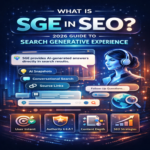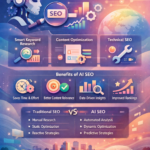
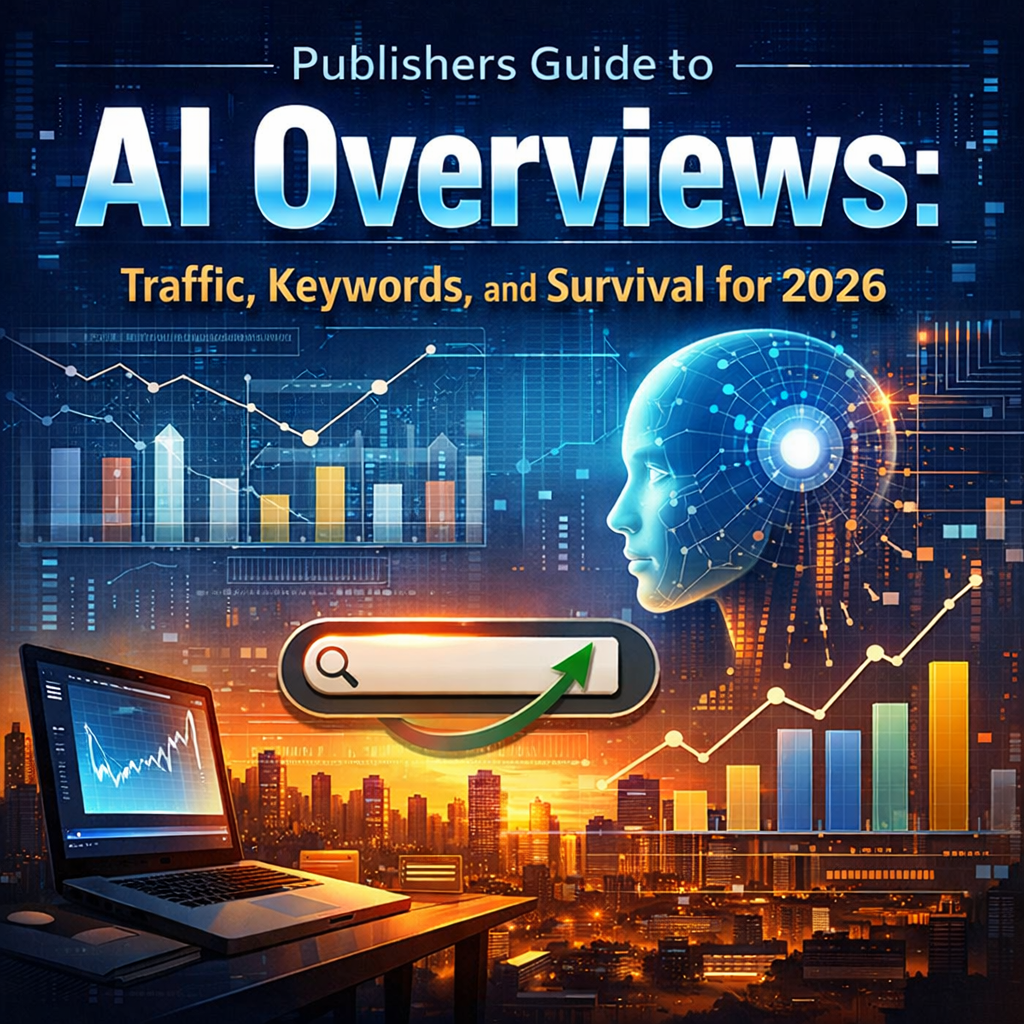
Search is no longer a list of links-it’s becoming an answer engine. With AI Overviews shaping how users discover information, publishers must rethink how they earn visibility, clicks, and authority. The old playbook of ranking pages and capturing traffic is shifting toward influence within AI-generated summaries. As a result, success in 2026 depends on adapting content strategy, keyword targeting, and technical SEO to this new layer of search.
Understanding AI Overviews and Their Impact
AI Overviews aggregate information from multiple sources and present concise answers directly on the search results page. Consequently, users often get what they need without clicking through. While this reduces traditional organic traffic, it also creates a new opportunity: being cited as a trusted source within these summaries.
Therefore, publishers must shift from “ranking first” to “being referenced first.” Visibility now depends on credibility, clarity, and structured information rather than just backlinks and keyword density.
The New Traffic Reality
Traffic patterns are becoming more polarized. On one hand, informational queries are increasingly resolved within AI Overviews, leading to fewer clicks. On the other hand, high-intent and complex queries still drive users to websites for deeper insights.
To adapt, publishers should focus on:
- Depth over volume: Instead of publishing many shallow articles, invest in comprehensive content that answers layered questions.
- Intent-driven content: Prioritize queries where users need more than a quick answer, such as comparisons, case studies, or expert opinions.
- Brand authority: When users recognize your brand in AI summaries, they are more likely to click through for validation.
In other words, traffic is no longer just earned-it’s qualified.
Keyword Strategy in the AI Era
Traditional keyword targeting is evolving rapidly. Exact-match keywords still matter, but context and intent now carry greater weight. AI systems interpret topics holistically, which means your content must align with broader search journeys.
Focus on Topic Clusters
Rather than targeting isolated keywords, build interconnected content hubs. For example, a pillar page supported by related articles signals topical authority. As a result, AI systems are more likely to reference your content when generating summaries.
Optimize for Conversational Queries
Users are searching in more natural language formats. Questions, comparisons, and “how-to” queries dominate AI-driven results. Therefore, structure your content to answer:
- What is it?
- How does it work?
- Why does it matter?
- What are the alternatives?
This approach increases your chances of being included in AI-generated responses.
Prioritize Long-Tail Keywords
Although high-volume keywords remain competitive, long-tail queries often trigger AI Overviews. These queries reflect specific intent, making them ideal for targeted content that delivers clear, structured answers.
Content Optimization for AI Visibility
Creating content is no longer enough-you must make it extractable, scannable, and trustworthy.
Use Clear Structure
AI models prefer content that is easy to parse. Use:
- Descriptive headings (H2, H3)
- Bullet points for key information
- Short paragraphs with focused ideas
This structure improves both user experience and AI readability.
Add Contextual Depth
Thin content rarely gets cited. Instead, provide:
- Examples and use cases
- Data-backed insights
- Expert perspectives
The more value you offer, the more likely AI systems will treat your content as authoritative.
Maintain Freshness
Outdated content loses relevance quickly. Regular updates signal reliability and ensure your content aligns with current trends and data.
Technical SEO Still Matters
Although AI Overviews focus on content quality, technical SEO remains essential. A well-optimized site ensures that search engines can crawl, understand, and trust your pages.
Key areas to prioritize include:
- Structured data: Helps search engines interpret your content more effectively
- Page speed: Faster sites improve user experience and indexing efficiency
- Mobile optimization: With most users on mobile, responsiveness is critical
Additionally, clean HTML and semantic markup make it easier for AI systems to extract meaningful information.
Building Authority and Trust
AI Overviews prioritize credible sources. Therefore, publishers must strengthen their authority signals.
Demonstrate Expertise
Content should reflect real knowledge and experience. Include author bios, credentials, and references where applicable. This builds trust with both users and AI systems.
Earn High-Quality Backlinks
While backlinks are evolving, they still indicate credibility. Focus on earning links from reputable and relevant websites rather than chasing volume.
Strengthen Brand Signals
Branded searches, mentions, and direct traffic all contribute to your authority. As a result, investing in brand building indirectly improves your chances of being cited in AI Overviews.
Measuring Success in 2026
Traditional metrics like clicks and rankings no longer tell the full story. Instead, publishers should track:
- Impressions in AI-driven results
- Brand visibility in search journeys
- Engagement quality (time on page, conversions)
Although traffic may decline for some queries, higher-quality visits often lead to better outcomes. Therefore, focus on impact rather than volume.
Survival Strategies for Publishers
Adapting to AI Overviews is not optional-it’s essential. However, publishers who act early can gain a competitive edge.
To stay ahead:
- Create content that answers complete user journeys, not just single queries
- Build topical authority through structured content clusters
- Optimize for clarity, not just keywords
- Invest in brand credibility and trust signals
- Continuously update and refine your content
By doing so, you position your website as a reliable source that AI systems can confidently reference.
Final Thoughts
AI Overviews are reshaping search, but they are not eliminating opportunity. Instead, they are rewarding publishers who prioritize quality, relevance, and authority. While the rules are changing, the core principle remains the same: deliver real value to users.
Publishers who embrace this shift will not only survive but thrive in 2026. Those who resist may find their visibility fading. The choice is clear-adapt your strategy now, or risk being left out of the conversation entirely.