Search engine optimization is no longer just about keywords, backlinks, and technical tweaks. As search engines evolve to better understand context, intent, and relationships between concepts, a more advanced approach has emerged – Entity SEO. For small and medium-sized businesses (SMBs), this shift presents both a challenge and an opportunity. Those who adapt early can build stronger visibility, authority, and long-term search performance.
This guide explores what Entity SEO is, why it matters, and how SMBs can strategically leverage it to compete in modern search.
What is Entity SEO?
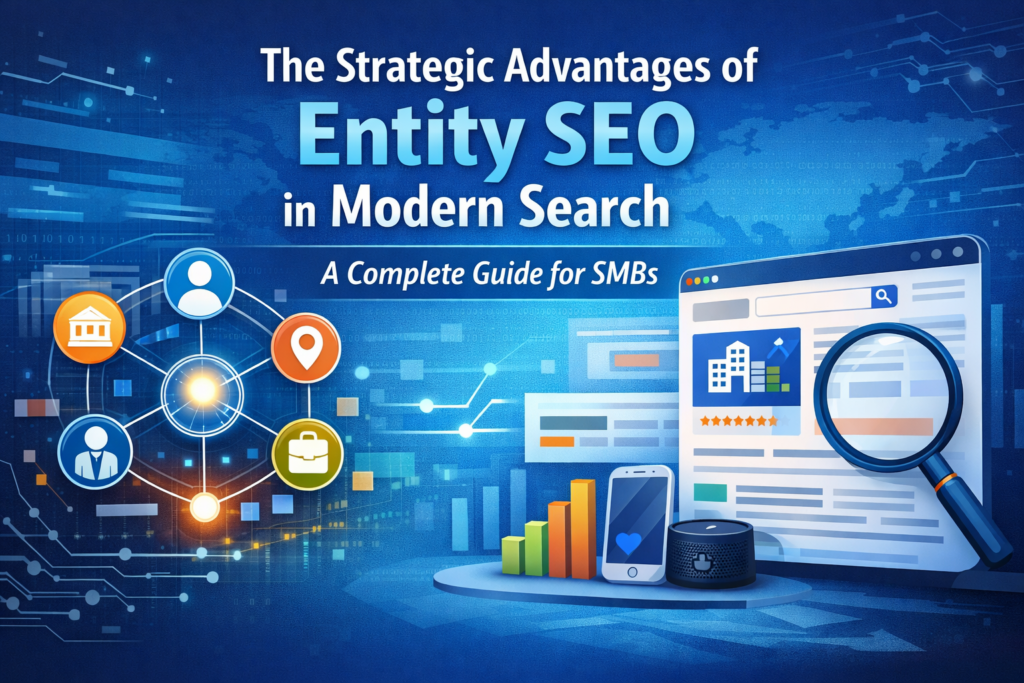
Entity SEO focuses on optimizing content around “entities” rather than just keywords. An entity can be a person, place, business, product, or concept that is clearly identifiable and distinguishable. Search engines now rely heavily on structured data and knowledge graphs to understand these entities and how they relate to one another.
For example, instead of simply targeting a keyword like “SEO services in India,” search engines analyze the business offering the service, its reputation, location, expertise, and how it connects to related topics like digital marketing, local SEO, or industry-specific solutions.
This means that your business is no longer just ranking for keywords—it is being evaluated as an entity within a broader ecosystem.
Why Entity SEO Matters for SMBs
For SMBs, competing with large brands on traditional SEO metrics alone can be difficult. Entity SEO levels the playing field by rewarding clarity, authority, and contextual relevance rather than just domain size or backlink volume.
Search engines aim to deliver precise, trustworthy answers. If your business is well-defined as an entity, with consistent and credible signals across the web, you stand a much better chance of being featured in rich results, local packs, and AI-driven search experiences.
Key Strategic Advantages of Entity SEO
1. Improved Search Engine Understanding
Entity SEO helps search engines understand exactly who you are, what you do, and where you operate. When your business information is structured and consistent across platforms, it reduces ambiguity and increases the chances of accurate indexing.
This clarity directly impacts how often your business appears in relevant search queries, especially for long-tail and intent-driven searches.
2. Stronger Visibility in Knowledge Panels and Rich Results
One of the biggest advantages of Entity SEO is the potential to appear in enhanced search features such as knowledge panels, featured snippets, and AI-generated summaries.
These placements significantly increase visibility and credibility. For SMBs, appearing in such results can drive disproportionate traffic compared to traditional rankings.
3. Better Performance in Local Search
Local SEO and Entity SEO are closely connected. Search engines rely on entity data to determine local relevance. Businesses with accurate Name, Address, Phone Number (NAP) consistency, Google Business profiles, and local citations are more likely to rank in location-based searches.
For SMBs targeting specific regions or cities, this is a critical advantage that can directly impact lead generation and foot traffic.
4. Enhanced Trust and Authority
Entity SEO contributes to building digital authority. When your business is consistently mentioned across authoritative sources—such as directories, industry websites, and social platforms—it signals trustworthiness.
Search engines interpret these signals as indicators of credibility. Over time, this strengthens your overall domain authority and improves rankings across multiple keywords and topics.
5. Alignment with AI-Driven Search
Modern search is increasingly influenced by AI and machine learning. These systems prioritize entities and their relationships rather than isolated keywords.
By optimizing for entities, SMBs align their strategy with the future of search. This ensures better visibility in AI-generated answers, voice search, and conversational queries.
Core Elements of an Effective Entity SEO Strategy
1. Structured Data Implementation
Structured data (schema markup) helps search engines understand your content in a standardized format. Adding schema for your business, services, products, and reviews can significantly enhance how your website is interpreted.
For SMBs, implementing basic schema such as Local Business, Organization, and FAQ schema can make a noticeable difference.
2. Consistent Business Information
Consistency across all digital touchpoints is crucial. Your business name, address, phone number, and website details should match exactly across directories, social profiles, and listings.
Even minor discrepancies can confuse search engines and weaken your entity signals.
3. Content Depth and Context
Entity SEO requires content that goes beyond surface-level information. Instead of focusing on isolated keywords, create comprehensive content that covers related topics, answers user questions, and establishes topical authority.
For example, a business offering legal services should publish content on case types, legal processes, compliance issues, and client FAQs. This builds a strong entity profile within that domain.
4. Internal Linking and Topic Clusters
Organizing your content into topic clusters helps search engines understand the relationships between different pages on your website.
Linking related content strategically reinforces your expertise in a particular area and strengthens your entity relevance.
5. Online Mentions and Citations
Mentions of your business across the web—even without direct backlinks—contribute to your entity recognition. Listings in directories, press mentions, and industry platforms all help establish your presence.
The goal is to create a consistent and widespread digital footprint that reinforces your identity.
Common Mistakes SMBs Should Avoid
Many SMBs attempt to adopt Entity SEO but fall into common pitfalls. One of the biggest mistakes is treating it as a one-time setup rather than an ongoing strategy. Entity signals evolve over time and require regular updates and monitoring.
Another mistake is ignoring content quality. Simply adding schema markup without meaningful, well-structured content will not deliver results. Search engines prioritize relevance and usefulness above all else.
Lastly, inconsistency across platforms can significantly weaken your efforts. Ensuring uniformity in business information is fundamental to success.
The Future of Search and the Role of Entities
Search engines are moving toward a more semantic and intent-driven approach. As AI continues to shape search experiences, the importance of entities will only grow.
For SMBs, this represents a shift from short-term tactics to long-term brand building. Entity SEO is not just about rankings—it is about establishing your business as a recognized and trusted entity in your industry.
Final Thoughts
Entity SEO is no longer optional in modern search. It is a strategic necessity for SMBs that want to remain competitive and relevant. By focusing on clarity, consistency, and contextual relevance, businesses can build stronger connections with search engines and users alike.
The advantage lies in understanding that your business is more than a collection of keywords—it is an entity with relationships, authority, and a digital identity. SMBs that embrace this perspective will be better positioned to thrive in the evolving search landscape.